WASHINGTON – Seven months into Trump 2.0 have felt like two years. Blink, and you’ve missed either a life-altering event at home or a geopolitical reshuffle that could shape the next decade.
Donald Trump returned to the White House with unfinished business, fresh challenges, and a re-imagined purpose: to truly Make America Great Again. The so-called experts who once dismissed his first term as an aberration—or his comeback as a ploy to dodge indictments—were quick to declare his second term a tired repeat. They did so at their own peril.
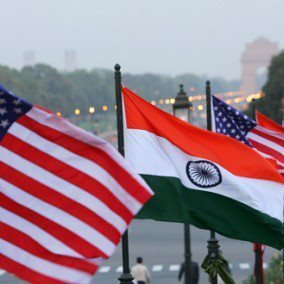
India, unfortunately, bought into that narrative. New Delhi bungled its Trump play so badly that it’s astonishing no heads rolled at the Ministry of External Affairs. And now, in ironic TV studio chatter, those same “experts” claim Trump’s every move is about chasing a Nobel. On Indian prime-time, one even called the prize “worthless.” Really? That misses the point entirely.
From Jan 6 to the White House, Again
In an era of 12-hour news cycles and doom-scrolling reels, it’s easy to forget why Trump has endured where others have faded. Since May 2015, when he launched his Presidential campaign, he spoke the uncomfortable truths, played the boogeyman others feared to be, and trusted his gut on decisions and deals.
In 2016, pundits predicted disaster. He won.
In 2020, many now admit that without COVID, he likely would have beaten Biden.
And in 2024, he tripled down—and returned stronger.
For a decade, his message has been the same: Make America Great Again. The agenda has expanded, the methods have evolved, and, yes, some ideas sounded outrageous. But none were impossible.
The Trump 2.0 Playbook
Seven months in, Trump has already rewritten what the presidency can do. Take immigration. For years, Congress failed to deliver meaningful reform. Trump didn’t wait. By July, illegal border crossings had plummeted to their lowest ever recorded—just over 24,000 nationwide encounters, a stunning 90 percent drop from the year before. Daily apprehensions fell to barely 150 people a day, with virtually no parolees entering the U.S. Compare that to the 184,000 releases under Biden during the same period of his term. Trump’s message was simple: this was never about new laws; it was about presidential will. And he proved it.
Trade? Once mocked as a Trumpian obsession, tariffs are now the centerpiece of U.S. economic policy. Trump slapped levies as high as 50 percent on imports from more than 60 countries, forcing reluctant partners to the table. The EU and Japan cut deals at 15–20%. Others—Brazil, China—faced the full weight. What Washington think tanks called “economic isolationism” in 2018 has now become “reciprocal trade” and is broadly popular with American voters.
And then there’s foreign policy. Trump has spent months chasing what critics caricature as a Nobel. In reality, he’s been rewriting America’s role in global conflicts. He ended an eight-day war with Iran by destroying its nuclear sites, publicly berated Zelenskyy and Netanyahu while still pressuring both toward uneasy truces, and forced Pakistan to halt escalation in its May clash with India—a standoff he later revealed had edged dangerously close to nuclear confrontation. In the Caucasus, he hosted Armenia and Azerbaijan at the White House, brokering a peace deal that not only ended decades of hostility but also handed Washington control over a new trade corridor linking East and West.
This looks more like legacy building than prize hunting.
The Legacy Trump Wants
What Trump is constructing is not a string of trophies, but an architecture of power. He has dismantled government agencies he sees as obstacles, re-centered Washington as the gravitational pull of global diplomacy, and expanded the boundaries of presidential authority in ways that will outlast him. Love or hate the man, the results are undeniable: his moves on immigration, trade, and war have been popular enough that future presidents—Republican or Democrat—will struggle to undo them.
And in the culture wars, he has shifted the very vocabulary of American politics. No more DEI-language mandates. No more government-funded gender transitions for minors. No more euphemisms like “undocumented” in place of “illegal.” These may seem like symbolic victories, but they resonate with voters who felt ignored. In less than a year, Trump has dragged the political center of gravity rightward, and he has done so with the same blunt force that carried him down that golden escalator in 2015.
Why This Matters
The public can be forgiven for forgetting the recent past. But for “experts” to peddle the idea that Trump is simply in pursuit of a Nobel Peace Prize is worse than lazy—it is malpractice.
Because history will not remember these years for whether a Scandinavian committee awarded him a medal. It will remember whether Trump reshaped America, its borders, its trade system, and its role in the world.
It’s not the Nobel, stupid.
It’s the legacy.

Rohit Sharma
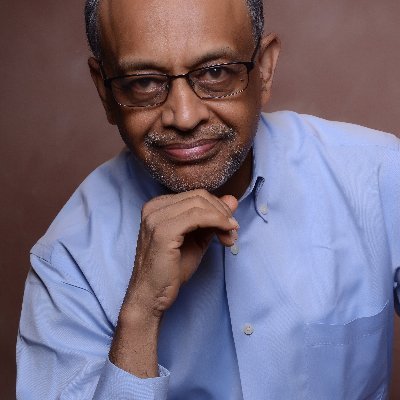
Rohit Sharma is a Senior Journalist who has lived in Washington DC since 2007. He currently is a contributor to Dainik Bhaskar, the world's third largest newspaper by readership. His opinion pieces feature on News 9 and The Quint. He has been invited as guest on the BBC, NDTV, India Today, AajTak, Times Now, Republic, Zee news and others. His work has featured in six Indian Languages.