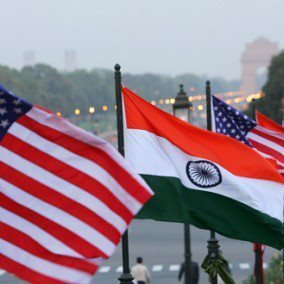
WASHINGTON – For over a decade, Indian diplomacy poured its energy, capital, and credibility into strengthening ties with the United States. Since the first meeting between Obama and Modi in 2014, the message was clear: India would bet big on the United States. From foundational military agreements to emotional outreach campaigns, from Indo-Pacific strategies to high-profile rallies in Houston and Ahmedabad, India shaped its foreign policy around a single idea—that a robust relationship with Washington would be the linchpin of its global rise.
However, the recent unraveling of that relationship, especially in the wake of Operation Sindoor and threats to tariffs, has exposed the naivety and one-dimensional nature of that bet. What was sold to the Indian public as a strategic masterstroke now looks, frankly, foolish. And the worst part? The warning signs were always there.
The Illusion of Strategic Depth
The last eleven years were built on a shallow illusion: that proximity to the American power center would automatically translate into enduring strategic depth. There were hugs, handshakes, and hashtags. There were summits and joint statements. But the fundamentals of trust and reciprocity were never institutionalized.
The Modi-Obama bonhomie, the Trump stadium rally, and Biden’s friendly overtures were read by Indian officials as confirmation of India’s centrality to U.S. strategic thinking. In reality, the relationship remained transactional, opportunistic, and heavily skewed toward personality-driven diplomacy. Indian diplomats, emboldened by access and flattery, failed to secure anything durable beneath the surface.
What was missing was a bipartisan foundation. Unlike Israel, which has entrenched support across both U.S. political parties and wields real influence in the corridors of power, India never built such depth. The engagement was almost always top-down, rarely bottom-up.
The D.C. Disconnect and the Trump Miscalculation
Nowhere was this strategic hollowness more apparent than in Washington, D.C. During one of the most consequential election cycles in recent memory, Indian diplomats appeared to have no profound understanding of what a Trump 2.0 presidency could look like. People in diplomatic circles pinned their hopes on a Kamala Harris candidacy, and in doing so, alienated large swathes of the MAGA movement and Trump-aligned institutions.
This wasn’t just misreading the tea leaves; it was strategic malpractice. By placing ill-informed bets on Vice President Harris and ignoring the reality of Trump’s chances of winning, the Indian embassy and its ecosystem left India dangerously unprepared.
A striking example came in September 2024, when Indian diplomats—eager to stage yet another “historic” moment for the domestic audience and burnish the image of a “New India”—floated the idea of bilateral meetings with both Trump and Harris on the sidelines of the QUAD summit, just seven weeks before the U.S. elections. Trump publicly accepted. But when the Harris meeting fell through, India backed out entirely—a move that was viewed in Trump world as a diplomatic slight.
Even more revealing was the February visit, when Trump pointedly did not come to receive Modi at the White House—a courtesy he has extended to every other head of state before and since. Indian media was promptly fed convenient “churan,” proclaiming success and downplaying the obvious snub. That same media now gleefully criticizes Trump, reflecting not just a lack of nuance but a total absence of long-term thinking.
The Optics Trap and the Diaspora Disconnect
India’s public diplomacy in America has long been more about spectacle than substance. Instead of empowering the diaspora to forge relationships on Capitol Hill, Indian missions often reduce their role to logistics managers for mass rallies and cheerleaders for the leadership’s image.
In contrast, other communities, particularly Israel’s, have spent decades building local political bridges—working across the aisle, engaging at state and federal levels, and making themselves indispensable in the American political conversation.
India, instead, asked NRIs to fill stadiums. The opportunity to build a network of bipartisan champions in Washington was wasted. Today, as criticism mounts in both parties, India finds itself without a political firewall in the U.S.
Operation Sindoor: The Breaking Point
The fallout from Operation Sindoor didn’t just reveal cracks; it exposed a diplomatic freefall. With Trump allies attacking India in public forums and Congressional figures expressing distrust, the so-called “strategic partnership” has begun to resemble a tactical liability.
India’s own diplomatic corps appeared flat-footed. There was no counternarrative. No strategic damage control. No coordinated pushback. The very same diplomats who had spent the last decade talking up India’s role in the Indo-Pacific had no plan when the terrain turned adversarial.
The notion that India could rely on sentimental bonds, diaspora clout, or “shared democratic values” to insulate itself from hard scrutiny has been shattered. If anything, Washington’s political class now seems more comfortable criticizing India, knowing there will be no cost.
Lessons Ignored, Leverage Lost
This isn’t just about one failed meeting or one snub. It’s about a broader failure to understand how power works in Washington. India’s diplomats, despite their presence in think tank circles and photo-ops, have struggled to convert access into advocacy.
And while India was busy aligning its global posture to please Washington—whether by buying U.S. arms, toning down ties with Iran, or maintaining symbolic distance from Russia—it got precious little in return. On trade, on immigration, on tech cooperation, the U.S. has rarely moved an inch.
Yet, Indian diplomacy continued to feed itself the same story: that being a new, dependable partner would eventually make India indispensable. Instead, it has made India predictable.
The Road Ahead: Time for a Hard Reset
India’s foreign policy now needs an honest reckoning. We must learn that mimicking the posture of a superpower without securing its privileges is a futile exercise. Delivering sermons abroad about the West, assuming the mantle of Global South leadership, and crafting media-ready zingers for X and Instagram reels may feel empowering—but they reveal more hubris than strategic depth. A proper reset begins by recognizing the limits of sentiment. It must also professionalize its diplomatic corps in the U.S., investing in building relationships across party lines, across agencies, and sectors. The diaspora, too, must be seen not as an audience but as an asset—not for rally optics, but for strategic influence.
Closing Thought
India walked into Washington thinking it was co-hosting a strategic alliance. Today, it sits on the sidelines, unclear if it’s even on the guest list. The last eleven years were not a masterclass in diplomacy. They were a lesson in mistaking applause for influence.
It’s time India learned it.

Rohit Sharma
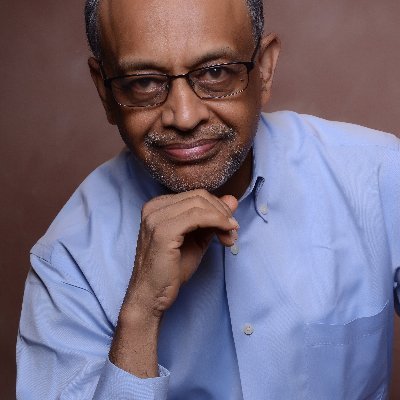
Rohit Sharma is a Senior Journalist who has lived in Washington DC since 2007. He currently is a contributor to Dainik Bhaskar, the world's third largest newspaper by readership. His opinion pieces feature on News 9 and The Quint. He has been invited as guest on the BBC, NDTV, India Today, AajTak, Times Now, Republic, Zee news and others. His work has featured in six Indian Languages.