NEW YORK – For more than a decade, the BJP and its powerful propaganda machinery have done everything possible to discredit Rahul Gandhi and make him irrelevant in Indian politics. They called him “Pappu,” ridiculed his speeches, questioned his intelligence, and portrayed him as incapable of leading a nation of 1.5 billion people. A largely compliant section of the national media joined this campaign and made him the object of endless jokes and personal attacks. But they failed to understand that Rahul Gandhi was made of stronger stuff. Despite electoral defeats, political humiliation, and attempts to intimidate him through legal proceedings, he refused to surrender. Today, the very man they tried so hard to destroy politically is emerging as one of the most credible voices challenging the Modi establishment. It is an extraordinary transformation, not necessarily because Rahul Gandhi has changed, but because more and more Indians may finally be recognizing the truth in what he has been saying all along.
One must give Rahul Gandhi credit for standing his ground when many others, including leaders within his own party, appeared to have lost their courage. When the BJP political machine, led by Narendra Modi and Amit Shah, was riding high on electoral victories, enormous financial resources, and near-unquestioned media support, Rahul Gandhi kept speaking out against the government’s policies and its increasingly authoritarian tendencies. At times, he seemed to be waging an almost one-person crusade against an entrenched political establishment. Several Congress leaders were reluctant to confront the government openly, while others chose the easier path of political accommodation or defection. Rahul Gandhi, by contrast, remained relentless in questioning the Prime Minister on unemployment, corruption, the concentration of wealth, and the steady weakening of democratic institutions. Whether one agrees with all his political positions or not, it is difficult to question the courage and determination he has demonstrated under these circumstances.
The efforts to silence him were not limited to political criticism. His conviction in a defamation case cost him his parliamentary membership until the Supreme Court stayed the conviction, paving the way for his reinstatement. The National Herald case continued to cast a shadow over his political career. Complaints and legal proceedings became part of the political battles surrounding him. One may argue that the law must take its course and that nobody, including Rahul Gandhi, should be above it. However, when opposition leaders face repeated legal challenges while many politicians accused of wrongdoing are welcomed into the ruling party, people are entitled to question whether the law is being applied equally. Rahul Gandhi could have moderated his criticism, sought political accommodation, or faded away. Instead, he became more outspoken. That persistence, in my view, has contributed enormously to his emergence as a national leader.
I believe the Bharat Jodo Yatra marked a significant turning point in his political journey. While Narendra Modi continued to address the nation from carefully organized platforms, Rahul Gandhi decided to walk among ordinary people, listen to their grievances, and understand their anxieties about the future. He met farmers, workers, students, unemployed young people, women, and small-business owners who were struggling to make ends meet. There is something fundamentally different about a leader who is willing to walk thousands of kilometers and listen to people rather than merely address them from a podium. The journey also revealed another side of Rahul Gandhi that the BJP’s propaganda machinery had conveniently ignored. He was accessible, patient, and willing to engage people who disagreed with him. The man portrayed as a political novice was demonstrating resilience and human understanding indispensable to anyone aspiring to lead a diverse country like India.
However, Rahul Gandhi’s growing political stature cannot be understood without examining what has happened to India over the last twelve years. Narendra Modi came to power promising development, millions of jobs, an end to corruption, and a brighter future for the country’s younger generation. He spoke of transforming India into an economic powerhouse where merit, hard work, and enterprise would be rewarded. India’s youth responded enthusiastically to those promises. But after more than a decade, one has to ask a simple question: how much of that promise has translated into a better life for the ordinary young Indian? India has undoubtedly made progress in certain sectors, and it would be unfair to deny those achievements. Yet economic growth figures and grand announcements mean little to an educated youngster who cannot find a decent job, or to a family that has spent its life’s savings educating a child who remains unemployed.
The controversies surrounding competitive examinations such as NEET have further shaken young people’s confidence in the fairness of the system. When students spend years preparing for examinations, sacrificing their youth and their families’ resources, they have every right to expect that their future will be determined by merit rather than irregularities, leaks, or manipulation. What could be more discouraging than discovering that even the examination system, which should be beyond reproach, may not be functioning fairly? Rahul Gandhi has repeatedly raised these issues, but the government has too often responded by dismissing his criticism as politically motivated. The frustration among young Indians is not imaginary. It is rooted in their everyday experiences and cannot be dismissed with speeches, slogans, or television advertisements.
The situation is further complicated by changing opportunities abroad. For decades, ambitious Indian youngsters looked toward the United States, Canada, Europe, and other countries for higher education and professional advancement. That avenue is becoming increasingly difficult due to immigration restrictions, rising educational costs, and changing economic conditions. As someone who came to the United States in 1968 and has watched generations of Indians build successful lives abroad, I recognize the enormous role that international opportunities have played in expanding the horizons of India’s middle class. But today’s younger generation cannot assume that those opportunities will remain available on the same scale. When employment prospects at home are uncertain, and opportunities abroad are narrowing, frustration is inevitable. These young men and women were promised a new India where their aspirations would find fulfillment. Instead, many are beginning to wonder whether they have been handed a future considerably less promising than the one they were led to expect.
Another troubling question is who has benefited most from India’s economic growth. The extraordinary expansion of corporate empires associated with businesspeople such as Ambani and Adani has drawn considerable public attention, particularly amid Rahul Gandhi’s repeated allegations about the concentration of economic power and the relationship between big business and political authority. These allegations deserve scrutiny, not dismissal through personal attacks. Nobody should begrudge successful entrepreneurs their wealth if they acquire it through legitimate enterprise and fair competition. However, when wealth becomes increasingly concentrated among a few while millions of ordinary citizens struggle with unemployment, rising costs, and declining economic security, questions about the government’s priorities become unavoidable. Economic development should not be measured merely by the number of Indian billionaires appearing on international lists. Its real measure must be whether an ordinary citizen has a reasonable opportunity to earn a livelihood, educate his children, own a home, and live with dignity.
Another area where Rahul Gandhi has shown unusual persistence is his questioning of how democratic institutions function, particularly the Election Commission and the electoral process. The controversy surrounding the Special Intensive Revision of electoral rolls has raised serious questions about transparency and the protection of legitimate voters. I have personally experienced the anxiety associated with voter-list verification in Kerala, despite having voted in several previous elections. Therefore, I do not regard these issues as abstract political arguments. The right to vote is fundamental to democracy, and any process that risks excluding eligible citizens deserves careful public scrutiny. Allegations of electoral manipulation must be investigated with credible evidence and due process, but they cannot simply be dismissed because the opposition raises them. Rahul Gandhi deserves credit for insisting that the integrity of the electoral system must remain a matter of national concern. If people begin losing confidence in the institutions entrusted with conducting free and fair elections, the damage to democracy could be profound.
I am particularly struck by the changing political mood among sections of India’s younger generation. Many of today’s young voters have grown up knowing Narendra Modi as the only Prime Minister during their politically conscious years. They have been exposed to a continuous narrative of national greatness, strong leadership, religious pride, and economic transformation. But as they enter adulthood, they are discovering that slogans cannot provide employment, religious polarization cannot guarantee economic security, and political spectacle cannot replace good governance. One cannot assume that the entire younger generation has turned against the BJP, and it would be premature to make such a claim. Nevertheless, indications suggest growing dissatisfaction among young people who feel their aspirations have not been adequately addressed. This matters because younger voters are often less tied to the political loyalties of previous generations and more concerned with the opportunities available to them.
This is precisely where Rahul Gandhi finds himself at an important moment in his political career. He has spoken for years about unemployment, inequality, the misuse of institutions, and the danger of excessive power concentration. His opponents ridiculed him, and at times even sections of the public dismissed his warnings. But political circumstances can change public perceptions. When people begin to experience the very problems a leader has been warning about, they may reconsider their earlier judgments. Rahul Gandhi’s strength today is that he did not suddenly discover these issues because public opinion might be changing. He was raising them when it was politically inconvenient and when the ruling establishment appeared invincible. That gives his arguments a degree of credibility that cannot be manufactured overnight through publicity campaigns.
Rahul Gandhi has made another important contribution to Indian politics. He has challenged the atmosphere of fear that has gradually developed around the country’s political leadership. For too long, criticism of Narendra Modi has been portrayed by some of his supporters as an attack on India itself. Some have often equated questioning government policies with a lack of patriotism. This is a dangerous proposition in any democracy. India is much larger than any Prime Minister or political party, no matter how popular or powerful they may be. No leader has a monopoly on patriotism, and no government can claim that its decisions are beyond criticism. Rahul Gandhi has consistently rejected that notion and demonstrated that political opposition is not merely a constitutional privilege but a democratic responsibility. By confronting the Prime Minister directly, he has helped strip away some of the aura of political invincibility the BJP carefully cultivated around its leadership.
Of course, Rahul Gandhi’s emergence as a credible national leader does not automatically mean that the Congress Party is ready to replace the BJP at the Center. That would require far more than the popularity or perseverance of a single individual. Congress must rebuild its grassroots organization, encourage younger leaders, restore internal accountability, and offer clear policies that address ordinary Indians’ economic and social concerns. The party cannot keep depending on Rahul Gandhi to do all the heavy lifting. In contrast, others remain preoccupied with internal rivalries, personal ambitions, and preserving their own positions. Some Congress leaders must also recognize that the political culture of entitlement and factionalism has contributed to the party’s decline. If Congress is serious about returning to power, it must demonstrate that it has learned from its mistakes and is prepared to offer the country something substantially better.
India is at a critical juncture. The institutions that sustained its democracy for decades are facing questions about their independence and credibility. Economic inequality remains a serious concern, unemployment continues to trouble young people, and communal divisions have damaged the social fabric of a country that has historically taken pride in its diversity. The BJP government may continue to enjoy considerable political support, and its organizational strength should never be underestimated. But no political establishment, however powerful, can assume that public loyalty will remain permanent. Ultimately, governments are judged not merely by the promises they make or the emotions they arouse but by the tangible improvements they bring to people’s lives.
The emergence of Rahul Gandhi as a national leader should therefore be viewed in a much broader context. Here is a man who endured years of personal ridicule, political setbacks, legal challenges, and relentless efforts to discredit him. He could have walked away from politics and enjoyed a comfortable private life. Instead, he chose the difficult path of confronting a powerful government and speaking out on issues he believed mattered to the country’s future. At times, his own party seemed uncertain about its direction, but he continued his political struggle. In the process, he has demonstrated a quality that is increasingly rare in contemporary politics: the willingness to stand by one’s convictions even when doing so carries a heavy personal and political price.
The political climate may now be shifting in a way that lets Rahul Gandhi turn that persistence into something much larger. The growing anxieties among young Indians, questions about the fairness of institutions, and dissatisfaction over economic opportunities could create the conditions for a significant political realignment. Whether that happens will depend on Rahul Gandhi’s ability to connect these concerns to a convincing program of national renewal and to bring people together across religious, caste, regional, and political divisions. He must also convince the electorate that Congress can provide honest, competent, and accountable governance rather than merely an alternative set of political personalities.
I have lived long enough to know that political fortunes can change dramatically. Leaders once considered invincible have been defeated, and those dismissed as irrelevant have returned to shape the course of history. India’s own democratic experience provides many examples of such transformations. Rahul Gandhi’s political journey may well be another. The BJP spent years trying to convince the nation that he was incapable of leadership. Still, in doing so, it may have underestimated the determination of the very man it sought to marginalize.
Rahul Gandhi now has an opportunity to seize the initiative and offer the country a new direction. The younger generation, in particular, deserves leadership that speaks honestly about its problems and offers realistic opportunities for advancement, rather than relying on political slogans and manufactured divisions. India cannot afford to squander the aspirations of millions of young people whose talents and energy should drive the country’s progress. It needs a government that respects democratic institutions, protects constitutional freedoms, encourages fair competition, and puts the interests of ordinary citizens ahead of powerful political and economic interests.
The real significance of Rahul Gandhi’s emergence is not simply that he has survived the BJP’s campaign to discredit him. It is that he has continued to challenge the direction the country is moving in, even when the odds were overwhelmingly against him. For years, he spoke while many others remained silent. He persisted when others retreated. He raised questions that those in power would rather not answer. Today, more Indians may be willing to listen.
The man once dismissed as “Pappu” has become a serious challenger to Narendra Modi’s political dominance. Whether he will succeed in bringing about a change of government remains to be seen. But one thing is certain: Rahul Gandhi has earned his place in the national political conversation through sheer persistence and courage. If the growing dissatisfaction among India’s younger generation translates into a demand for meaningful political change, he may find himself at the right place at the right time to lead that transformation. India deserves such an opportunity, and Rahul Gandhi must not let it slip away.

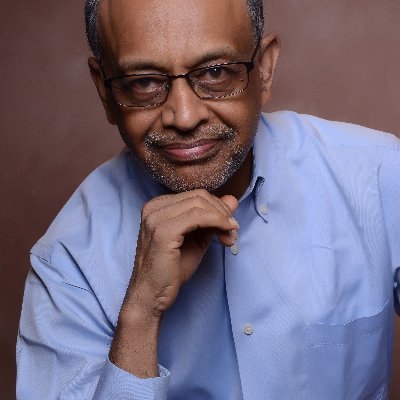
George Abraham
George Abraham is Vice-Chairman of Indian Overseas Congress, USA.